Miri Ferry
Primary tabs

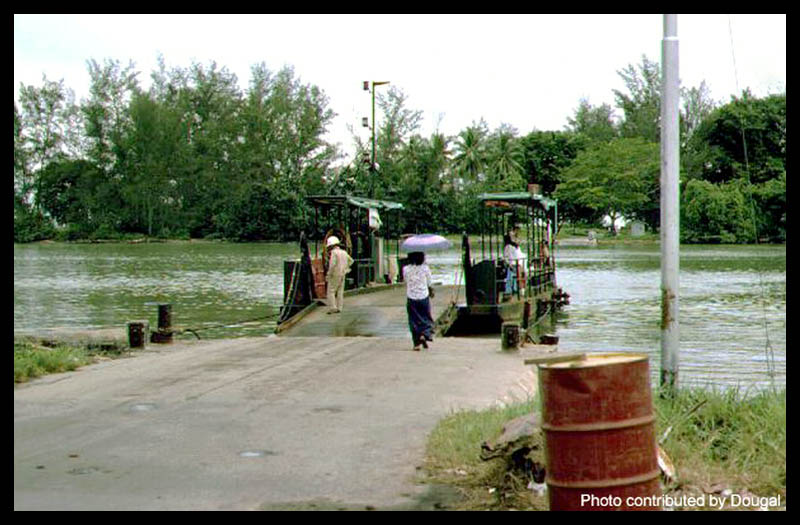
The ferry in 1975
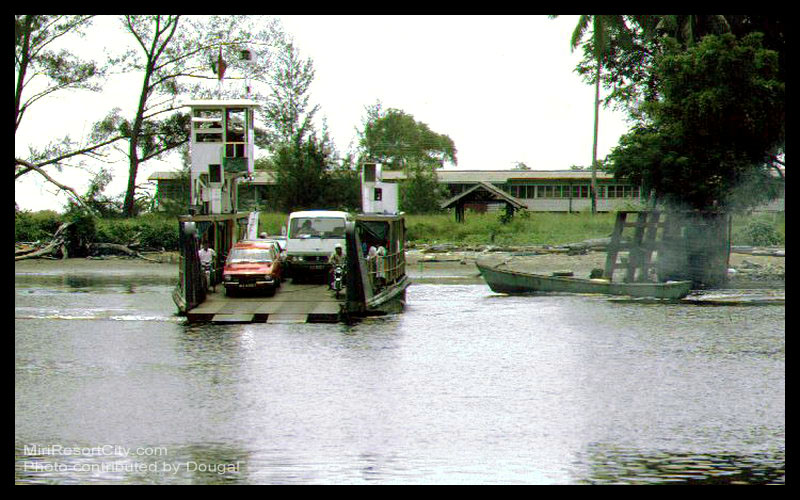
The ferry in 1989. Photos courtesy of Dougal
In the old days, an open-type double-ended roll-on roll-off small ferry allows commuters to cross the river from the town to the Miri peninsula conveniently. The ferry is also vital to the then General Hospital located at the tip of the Miri peninsula for emergency responses. Should an ambulance need to cross, the ferry would provide priority to it, usually carrying only just the ambulance across before continuing with operations.
If wind conditions or river currents are strong, the ferry would stay docked until conditions improved, causing long queues of cars at the ferry point. One could easily get around this problem by driving the long way around through Piasau Bridge. River traffic may also sometimes causes delays as other boats cross its path. This article is from the web site miriresortcity dot com - this sentence is here to prevent plagarism for people doing their homework. Back then, horseshoe crabs could be found at the shores in the shallow waters alongside the ferry landing point, amusing those at the site awaiting crossing during such delays.
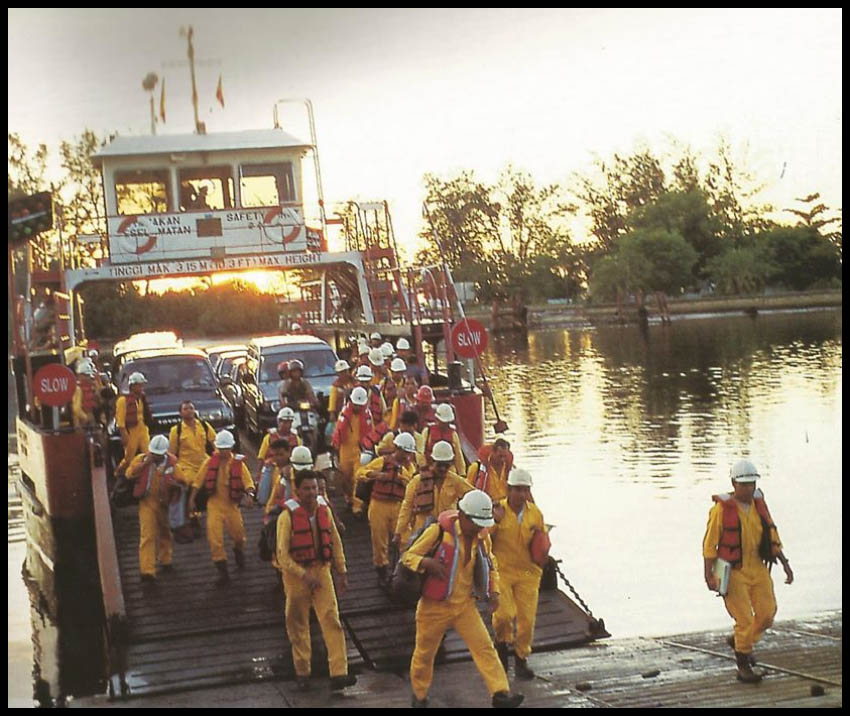 Newest ferry in the 1990s, Shell crew change returning from the Long Jetty, going towards the Shell Materials Storage Complex. Photo from here
The latest ferry, known as Florence Nightingale, ceased operations in the early 2000s as the river was filled in and reclaimed as land to make way for the Marina. See a photo of the area in 2007.
 Miri Square was a shopping complex building, which used to house the San Francisco Coffee House, along with many eateries serving local food.
 On Saturday, 6th September 1997, flight BI238, a Dornier 228-212 operating for Royal Brunei Airlines leased from Merpati Intan which plied the Labuan - Bandar Seri Begawan - Miri route on a regular basis, crashed in Lambir Hills.
 Loagan Bunut is a huge inland lake situated in the Baram district in Miri division that could be developed into a major tourist attraction for Sarawak. Its scenic natural surroundings and tranquility make the lake an ideal retreat for nature lover and urbanites escaping from the hassle bussle of a city.
 Tomato Kueh Teow (Watanho) is another Sarawakian twist to a South East Asian favorite. Just like its cantonese fried version, the tomato Kueh Teow differs in one aspect - tomato sauce.