Miri Civic Center
Primary tabs

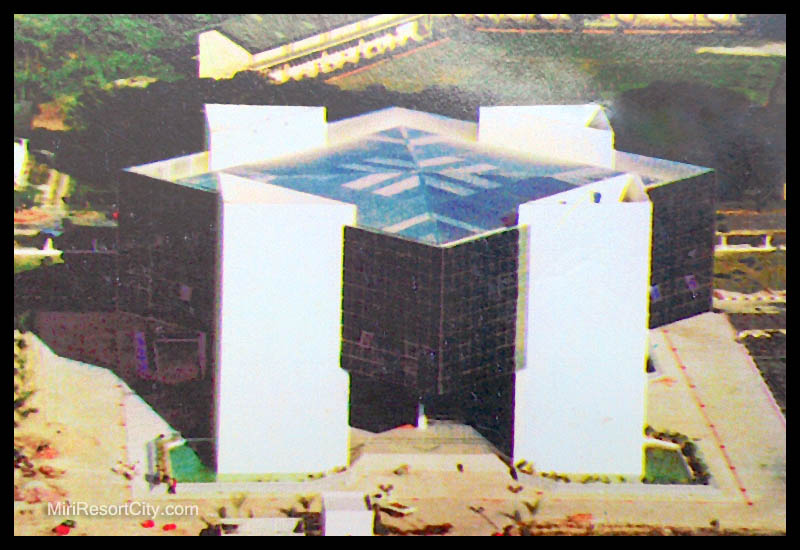
The Civic Center building, taken just after completion.
Completed in the late 1980s, Miri Civic Center functions as an exhibition foyer and amphitheater on the ground floor, holds the Miri Public Library on the second floor, and is a multi-purpose hall for various social functions such as wedding parties, concerts, large conferences etc. The seating capacity allows up to a thousand dining tables.
Its design is reminiscent of an oil-rig platform when view from ground level, with four huge pillars supporting the upper floors rising from water features at the base. When viewed directly from from the air, it has a shape of an octagonal star. The pillars are white in color and the upper floors are covered in blue-tinted glass windows. It makes for a recognizable landmark near the City Fan.
The Civic Center connects to the first phase of the City Fan, a walkway that connects to the open air amphitheater at the center of Miri City Fan.
#miriciviccenter
 Considered a lone hero of World War II, the story of Lighthouse Keeper Awang Metali is a grim reminder of the horrors of World War that Miri went through.
 Piasau Camp was a residential area built in the 1950s for Sarawak Shell for its employees, located on a stretch of the Miri peninsula adjacent to Lutong south from the Lutong airfield.
  An old graveyard known as Pendam Tekalong used to exist at the foot hill of Canada Hill, by the roadside in front of the roundabout in the area directly facing the