That Island at the Baram Delta
Primary tabs


While the coast of Miri is an endless stretch of sandy beaches and shallow sea, it isn't known for islands. In fact, up until the 1990s, there wasn't any island at all. Then at the Baram river delta, an island had seemingly suddenly appeared, having formed from river silt. At a last recorded size of approximately 2.5 kilometers in length, this island is constantly evolving into many shapes over time from the silt build up and river current / tidal action.
Seahorse, Bawai or Tikus?
The name of this island changes as much as the island changes shape physically itself;
A minister of the time had seen this sediment buildup island from a flight and thought that it looked like a shape of a seahorse, and named it "Seahorse island", or "Pulau Unduk-unduk / Pulau Kuda Laut" appropriately enough as Miri's mascot is a seahorse. This version of the story was written in a 2003 Miri Travel Brochure.
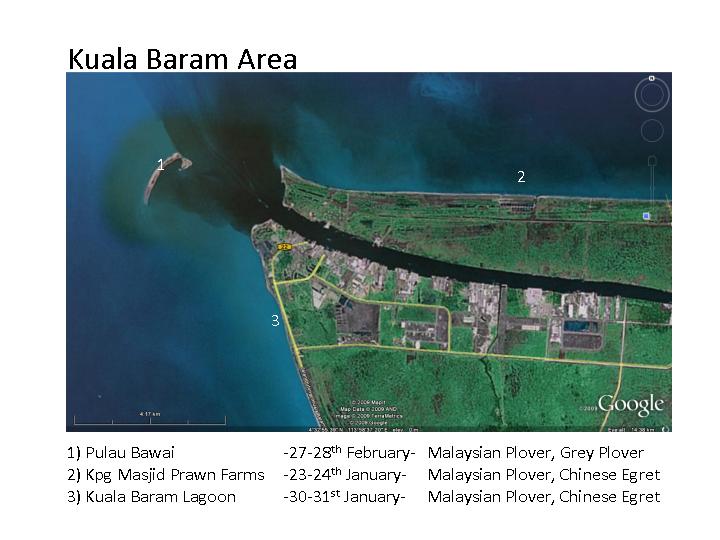
Oddly enough, in a Nature Society blog post on birdwatching posted on December 2009, the island was known as "Pulau Bawai". Picture from the Nature Society web site. (Note the shape had changed since from satellite images)
Yet however, in a news report in March 2015 on illegal immigrants, the island was written as "Pulau Tikus".
History
According to records, the island had formed in an extremely short time frame of just around five years beginning some time in the late 1990s - where previously there was nothing but sea in the area. The result of sea currents, tidal action and silt from the Baram River. Various flora and fauna eventually grew on the silt formation. This article is from the web site miriresortcity dot com - this sentence is here to prevent blatant plagarism.
When tides are favorable, there is now enough sediment along island and the Baram coast that it is now possible to reach the island from land without a boat. Compared with the recent satellite views, the 2009 "Bawai island" seemed to have disappeared entirely and another buildup had appeared a bit to the south in recent times. Seeing that this is a river delta this is not a surprising discovery as deltas and sediments evolve over time.
 Miri Resort Food Court is a large food court center located at Bulatan Commercial Center selling stall foods of various varieties.
  The successful discovery of offshore oil in the 1970s triggered a fresh development boom in Miri; luxury hotels were built, more houses constructed and new shopping centers and industrial estates established. Miri ranked as the second most important commercial town in Sarawak after Sibu town.
  One TT Commercial Center is located at the entrance to Taman Tunku. There are 29 lots of three-story shophouses in this commercial center.
 To picture Miri when the township came to know oil, we have to project ourselves into a very different past. When the original Shell men arrived, it consisted of 20 scattered houses and a few shops. These included a bazaar, a gambling farm, a pawn shop and an Arab shop. The trade of Miri consisted chiefly of jelutong, brassware, belachan and budu.