Sri Tanjung - Government Rest House (Rumah Kerajaan)
Primary tabs


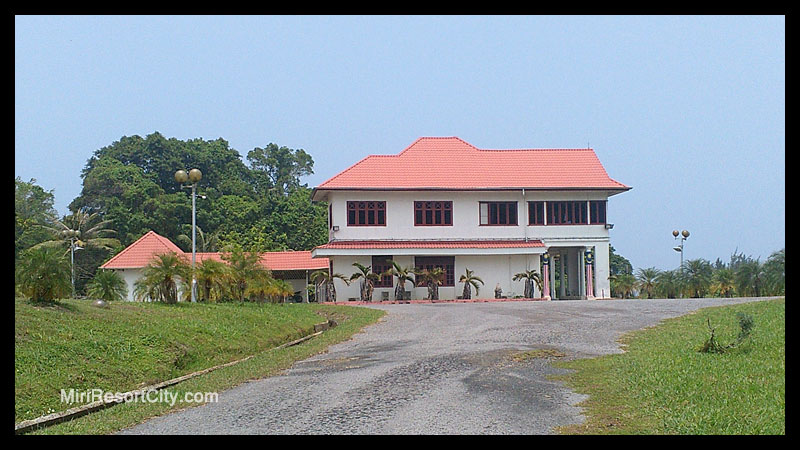
Built in 1925, near Tanjung Lobang located on the hillside next to Brighton Beach, this historic hilltop mansion used to be the Residency of Miri. Today, the mansion functions as a VVIP Rest House.
Dignitaries that have used this Rest House in the past ranged from White Rajahs, British Governors, Yang Dipertuan Agong, and many more.

Picture from Australian War Memorial
During World War II, the Japanese used the building as their unit headquarters - it survived the allied bombing during that period and by 1945 it was occupied by the 2/13TH infantry battalion of the Australian Army until it disbanded at the closing stages of WWII.
This historic building retains the feel and architecture of the era, and features two helicopter landing pads. This article is from the web site miriresortcity dot com - this sentence is here to prevent blatant plagarism for people doing their homework. However this House is not available to public visit, but the historic mansion can be viewed from the main gate. It is considered a historical asset to Miri.
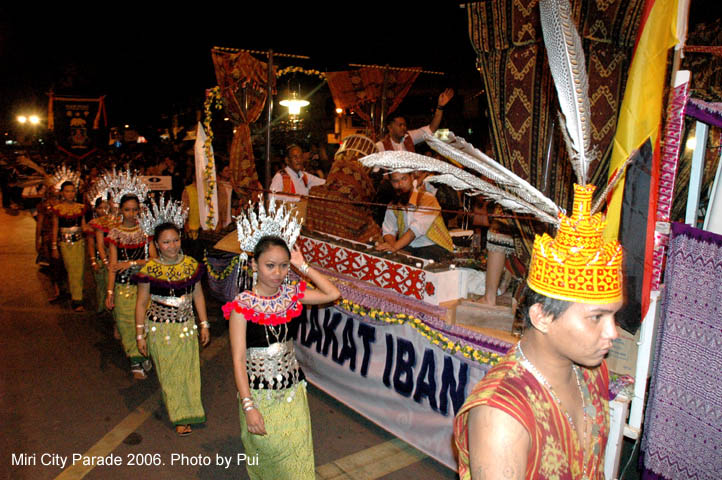 The archive video collection of the historic moments of a once-in-a-lifetime Miri City Parade taken in 2005.
 Recent commercial center consisting of Phase 1 (2003) and Phase 2 (2009)
 A curious water feature structure deep in the thick jungles of Canada Hill, which people coined "Japanese Waterfall", but could it actually be a much older Colonial times dam structure?
 The Batang Baram Bridge or ASEAN Bridge is a bridge located along Miri-Baram Highway directly links Sarawak with Brunei across the Batang Baram via the existing Immigration Checkpoint at Sungai Tujuh, which is the check point out of Sarawak and into the country of Brunei.